
Four offices involved before opening
Opening a hotel or ryokan means dealing with more than one office, each with its own focus, documents and deadlines.
The rough order of steps before opening
Details vary with the size of the work and the ward, but most projects follow the order below. The building, fire and public health center procedures run side by side in the same period.
Consult the three offices first
Take the drawings to the ward public health center and the fire station. Some wards, such as Shinjuku and Sumida, ask you to put up a sign at the building before you apply.
Design and building confirmation application
If a change of use to a hotel exceeds 200 m², or if there is a major renovation, you file a building confirmation application and obtain a certificate of confirmation (kakunin-zumi-sho). Work cannot start until the certificate is issued.
Filings before work starts
If fire alarm systems or similar equipment are being installed, a Class A fire equipment engineer files a notice of starting work (着工届) with the fire station at least 10 days before work begins.
Construction
The construction work is carried out. In some wards (Chuo and Minato), the public health center carries out an interim inspection once guest room sizes can be measured.
Completion filings and inspections
For the building, an application for completion inspection or a notice of completion of work is filed within 4 days of completion. For fire equipment, an installation notice is also filed within 4 days of completion, and an inspection follows.
Fire notice and public health center inspection
File a notice of starting use (使用開始届) with the fire station at least 7 days before the building is put into use. The public health center inspects the facility once it is ready to take guests.
License, accommodation tax registration and opening
Once the hotel business license is granted, register for accommodation tax at least 5 days before opening. You can operate only after the license is granted.
No official material shows how long it takes from purchase to opening. It varies widely with whether there is construction work, whether a building confirmation application is needed and whether the site is near a school, so this article does not give a timeframe.
Building procedures: the certificate of confirmation and what follows the work
The Building Standards Act prohibits starting work before the certificate of confirmation is issued (Article 6(8)). Once you have it, there is no required waiting period.
| Work | Certificate of inspection (kensa-zumi-sho) | When the work is finished |
|---|---|---|
| New construction or extension | Issued if the building passes | Apply for a completion inspection within 4 days of completion |
| Change of use (for example, turning an office or apartment building into a hotel) | Not issued | No completion inspection; file a notice of completion of work (工事完了届) within 4 days |
| Ward | What the public health center asks for |
|---|---|
| Taito | A copy of the certificate of inspection after the facility is completed, or a copy of the certificate of confirmation in the case of a change of use |
| Chuo | One of the certificate of inspection, the certificate of confirmation for the change of use, or an architect's certificate that the building complies with the law, by the time of the public health center's completion inspection |
Buyers sometimes assume a change of use will produce a certificate of inspection, and then fall behind in preparing documents for the public health center. Before work starts, confirm with the public health center and your architect which documents you will submit.
Fire filings and inspections
Under the Fire Service Act, hotels and ryokans are treated as buildings where many people sleep, so the equipment standards are stricter and there are more filings. The main filings in Tokyo's 23 wards are below.
| Filing | Filed by | Deadline | Legal basis |
|---|---|---|---|
| Notice of starting work on fire equipment (工事整備対象設備等着工届) | Class A fire equipment engineer | At least 10 days before the day work begins | Fire Service Act, Article 17-14 |
| Notice of installation of fire equipment (消防用設備等設置届) | Building owner, manager or similar | Within 4 days of the day work is completed, followed by a fire inspection | Fire Service Act Enforcement Regulations, Article 31-3 |
| Notice of starting use of a fire-prevention property (防火対象物使用開始届) | The person who actually uses the building (the operator) | At least 7 days before the day use begins | Tokyo Fire Prevention Ordinance, Article 56-2 |
| Notice of appointment of a fire prevention manager (防火管理者選任届) | The person with authority over management | Without delay after appointment | Fire Service Act, Article 8 (where capacity is 30 people or more) |
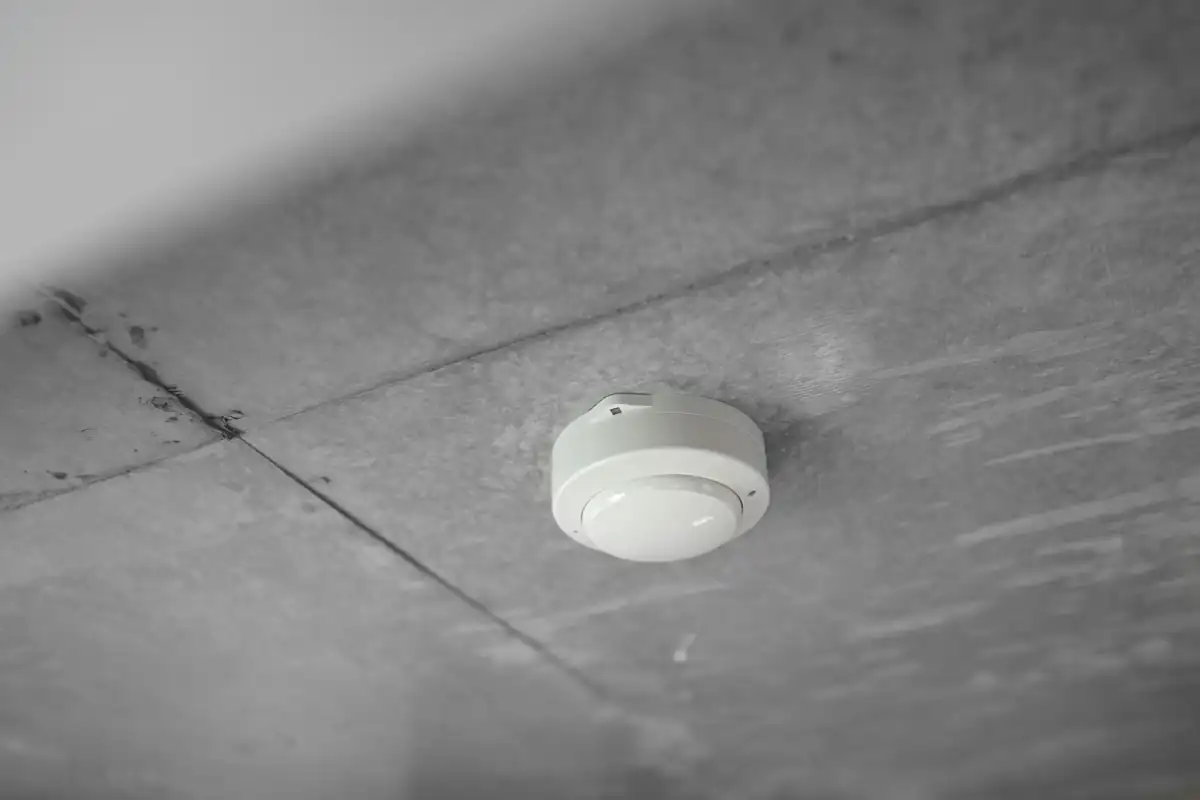
Some hotel business license applications attach a "fire law compliance notice" (消防法令適合通知書) showing that the building complies with fire safety law. The law does not require this document.
| Case | How it is handled |
|---|---|
| Attached to the application (some cases) | Attach the notice showing that the building complies with fire safety law to the application |
| Taito, Chiyoda and Sumida (examples) | The public health center contacts the fire station directly |
| An operating hotel is taken over with no change to the building or equipment | The notice can be omitted (Fire and Disaster Management Agency notice) |
Whether a fire prevention manager is needed, and whether that person needs a Class A or Class B qualification, depends on the capacity and total floor area. Check with the fire station for each building.
The public health center license: steps and fees differ by ward
The hotel business license goes through prior consultation, application, facility inspection and issue of the license certificate. Every ward follows this sequence, but the sign required before applying, the fee and the stated time to license differ from ward to ward.
| Ward | Sign before applying | Time to license (as stated by the ward) | Application fee |
|---|---|---|---|
| Chiyoda | Not found in the ward's material | Not stated | JPY 22,000 |
| Chuo | Not found in the ward's material | About 2 weeks after the completion inspection | JPY 22,000 |
| Minato | From 20 days before applying until the license is granted | 15 working days after the facility is completed (standard processing period) | JPY 22,000 |
| Shinjuku | For 14 days or more before applying | Not stated | JPY 30,600 |
| Sumida | From at least 15 days before applying (plus a briefing session or door-to-door visits for neighbors) | 2 to 3 weeks after the facility is confirmed to meet the standards | JPY 30,600 |
Within roughly 100 m of a school or child welfare facility, the ward asks the relevant bodies for their opinions after the application.
| Ward | Time |
|---|---|
| Chuo | About 1 to 2 months |
| Minato | 1 to 3 months |
Ward ordinances keep being amended. More and more wards, such as Chiyoda, Chuo and Taito, require a front desk or staff on site by ordinance.
| When | Ward |
|---|---|
| April 2026 | Sumida |
| July 2026 | Chiyoda, Shibuya, Koto |
| October 2026 | Taito |
| December 2026 (scheduled) | Toshima |
| Draft amendment only (not in force) | Shinjuku, Ota |
The differences between wards are summarized in our guide to Tokyo areas.
Tokyo accommodation tax: register 5 days before opening
The Tokyo accommodation tax is collected from guests by the hotel operator, who then pays it.
Registration: at least 5 days before opening
Facilities under a ryokan and hotel business license apply to register each facility at least 5 days before the day they open (Tokyo Metropolitan Accommodation Tax Ordinance, Article 8). Applications go to the Chiyoda Metropolitan Tax Office and can also be made online.
Declaration and payment: by the end of each month
The previous month's tax is declared and paid.
- Current tax per person per night
- Up to JPY 200
- Rate for stays from 1 April 2027
- 3%
- Charges not taxed from 1 April 2027
- Under JPY 13,000
- Date simple lodging and minpaku become taxable
- 1 April 2027
The current tax per person per night is JPY 100 when the accommodation charge is JPY 10,000 or more but under JPY 15,000, and JPY 200 for JPY 15,000 or more.
For stays from 1 April 2027, it becomes a flat rate on the accommodation charge, and stays under JPY 13,000 per person per night are not taxed. Simple lodging and minpaku, currently outside the tax, will be covered from the same date. Advance registration for operators who will become liable has been open since 1 July 2026.
Permits and notifications for serving food or alcohol
- Serving breakfast or other meals requires a restaurant business license from the ward. You appoint a food hygiene manager and consult the public health center with the design drawings before work begins.
- If the kitchen's fire-using equipment has a total input of 120 kW or more, notify the fire station at least 7 days before work begins (Tokyo Fire Prevention Ordinance, Article 57).
- If you only serve alcohol for guests to drink on the premises, no liquor sales license is needed. Selling alcohol for guests to take away requires a license from the tax office.
- Operating as a bar serving alcohol between midnight and 6 a.m. requires a notification to the Public Safety Commission.
Obligations that continue after opening
After the license is granted, the license holder has duties every day. If you hand operations to an operator, the contract should set out who handles what.
- Keep a guest register and retain it for 3 years from the date it is made (Hotel Business Act Enforcement Regulations, Article 4-2).
- For foreign guests with no address in Japan, record their nationality and passport number in the register and keep a copy of their passport.
- You can refuse a guest only in cases set by law. Since 13 December 2023, you can also refuse a guest who repeatedly makes demands that would place an excessive burden on you.
- If you change the structure, equipment or representative, notify the public health center within 10 days.
- Each month, declare and pay the previous month's accommodation tax by the end of the month.
Filings for the company
If you set up a new company to run the hotel, or hire staff, there are tax and insurance filings as well.
| Filing | Where to file | Deadline |
|---|---|---|
| Notification of incorporation (法人設立届出書) | Tax office | Within 2 months of incorporation |
| Notification of opening a salary payment office (給与支払事務所等の開設届出書) | Tax office | Within 1 month of opening an office that pays salaries |
| Notification of incorporation or establishment (法人設立・設置届出書) | Metropolitan tax office | Within 15 days of starting business |
| Notification of establishment of a labor insurance relationship (保険関係成立届) | Labor standards inspection office or similar | Within 10 days of the insurance relationship being established |
| Notification of new coverage for health insurance and employees' pension insurance (新規適用届) | Pension office or similar | Within 5 days of the event |
Who to ask for what
The work before opening is split among licensed professionals. Deciding at the start who handles what makes it less likely that a filing deadline is missed.
Questions
How many months does it take from purchase to opening?
There is no official benchmark. It varies widely with whether there is construction work, whether a building confirmation application is needed, and whether a nearby school means the ward has to seek opinions. Minato City states that it issues the license certificate 15 working days after the facility is completed, and Chuo City about 2 weeks after the completion inspection, but these periods start only once the work is finished.
If I buy an operating hotel, do I need the same procedures?
If the ward mayor's approval is obtained before the business transfer, you can take over the license and keep operating. If there is no construction work, you do not need a building confirmation application or a notice of starting fire equipment work. For details, see our guide to the license when buying an operating hotel.
Who files the fire notices?
The notice of starting work is filed by the Class A fire equipment engineer doing the work. The notice of starting use is filed by the person who actually uses the building, which means the operator. It is not a notice the contractor files for you.
Does the accommodation tax apply to simple lodging?
Not for stays up to 31 March 2027. From 1 April 2027, simple lodging and minpaku are covered too, and the rate changes to 3% of the accommodation charge.


